Why Waterproofing, Not Tile, Decides Whether Your New Shower Lasts
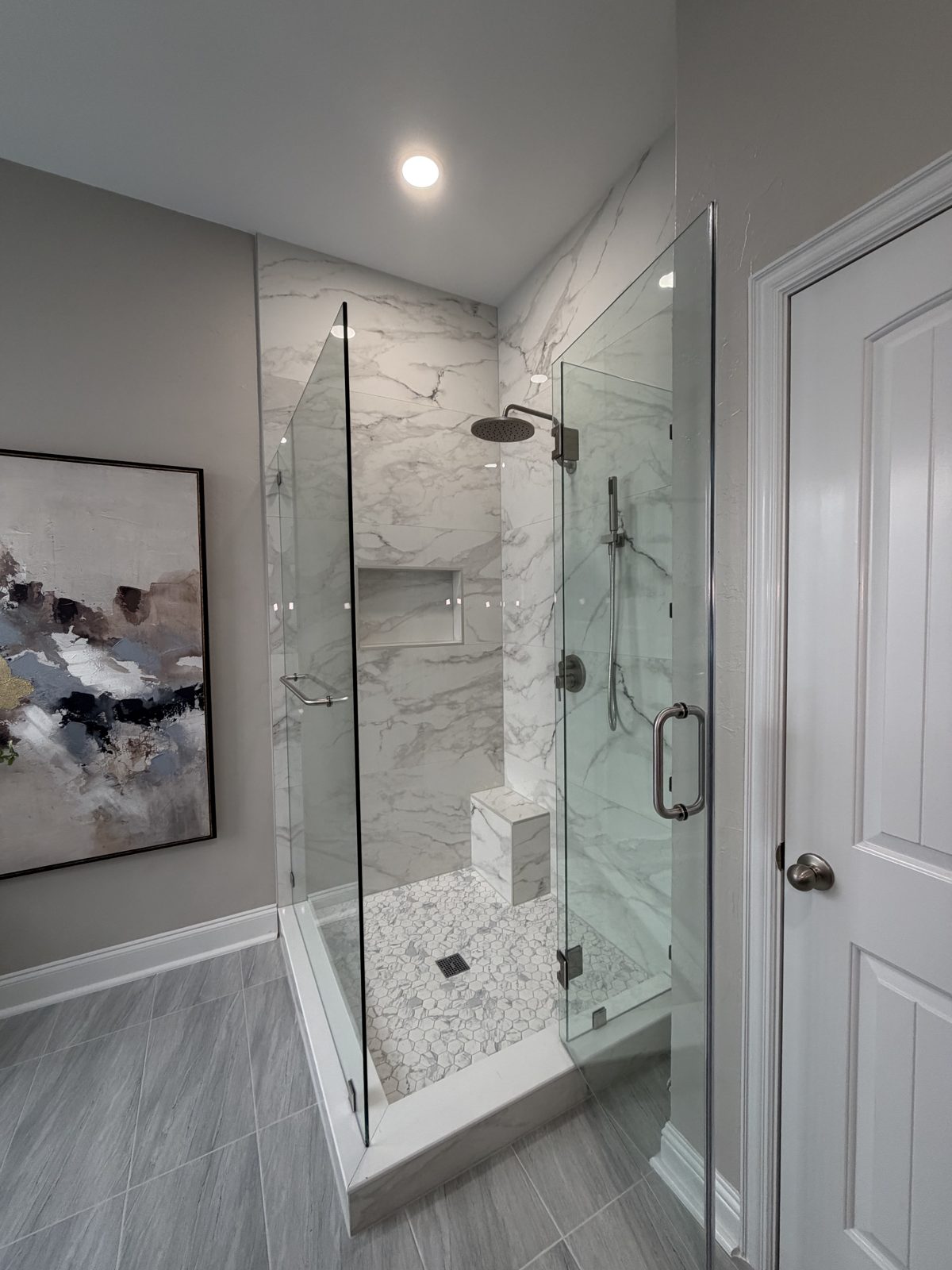
When homeowners in Allen, McKinney and Plano plan a shower remodel, most of the conversation is about tile, glass and fixtures. Those choices matter. But the part that decides whether the shower still looks and works the same in ten years is the layer nobody sees: waterproofing.
Tile and grout are not waterproof
Porcelain tile sheds water, but grout and the joints between tiles let moisture through. That is normal. A shower is built on the assumption that water will get behind the tile, and the waterproofing layer underneath is what stops it from reaching the studs, the subfloor and the drywall next to the shower.
When that layer is missing or done poorly, the problems show up slowly:
- Loose or cracked tile as the backing behind it softens.
- Dark grout and musty smell that cleaning never fixes.
- Stains on the ceiling below in two-story homes.
- Soft spots in the floor around the shower curb.
By the time you see these signs, the fix is usually a full tear-out.
What a properly waterproofed shower includes
Every shower our in-house crew builds follows the same order:
- Demolition to the studs. We remove the old tile and backer so we can see the framing and plumbing.
- Correct slope in the shower pan. Water has to run to the drain, not sit in corners.
- A sealed waterproofing system on the floor, walls, niches and bench, with every seam, corner and pipe opening sealed.
- Niches and benches waterproofed like the walls, because they are the most common leak points.
- Tile and grout last, set on a surface that is already waterproof.
Questions to ask any contractor
Before you sign for a shower remodel in Collin County, ask:
- What waterproofing system will you use on the walls and the pan?
- How do you seal niches, benches and the valve opening?
- Who does the tile and waterproofing work: your crew or a subcontractor?
- Is the waterproofing covered by your workmanship warranty?
If the answer to the first question is "the tile is waterproof," keep looking.
Tub-to-shower conversions need extra care
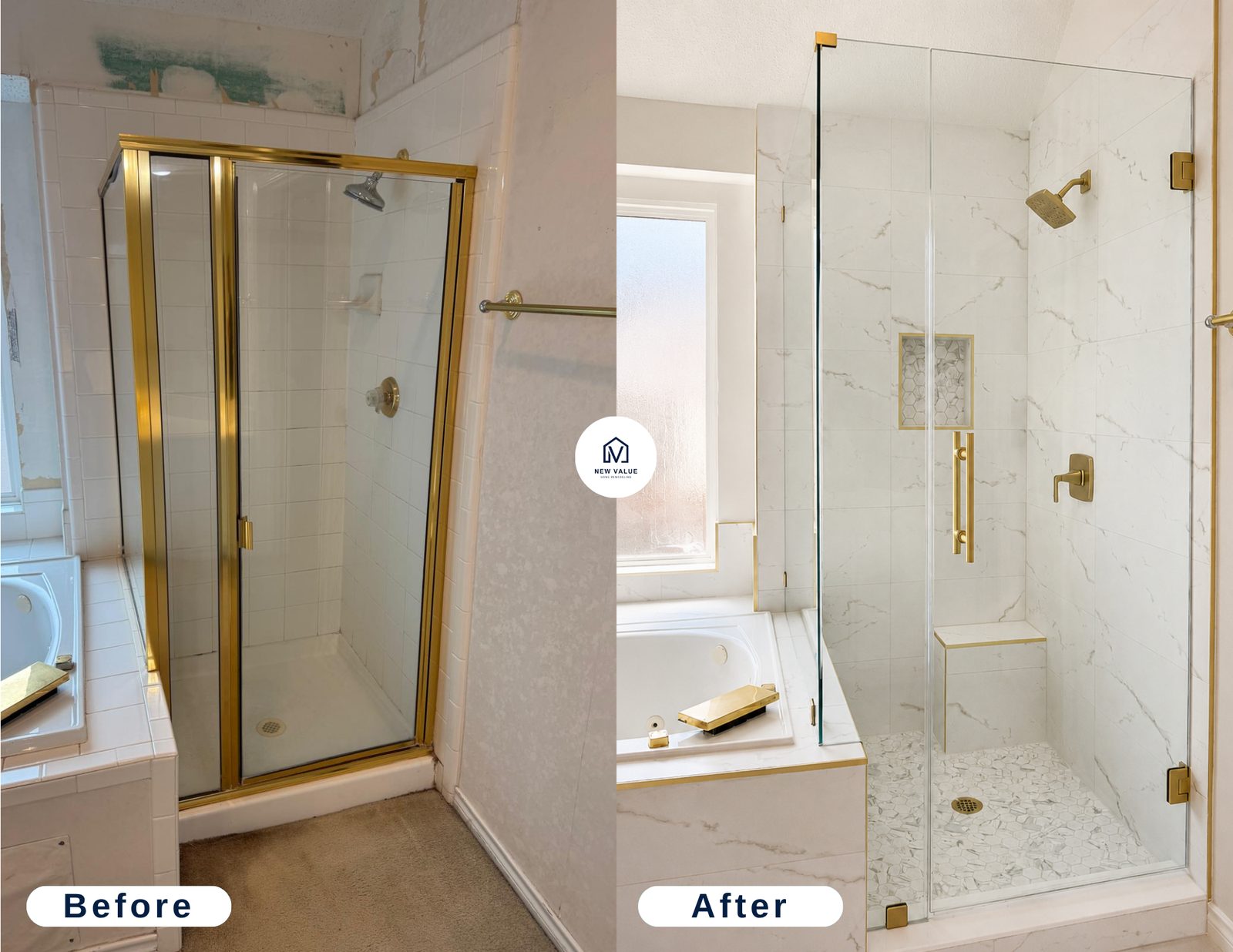
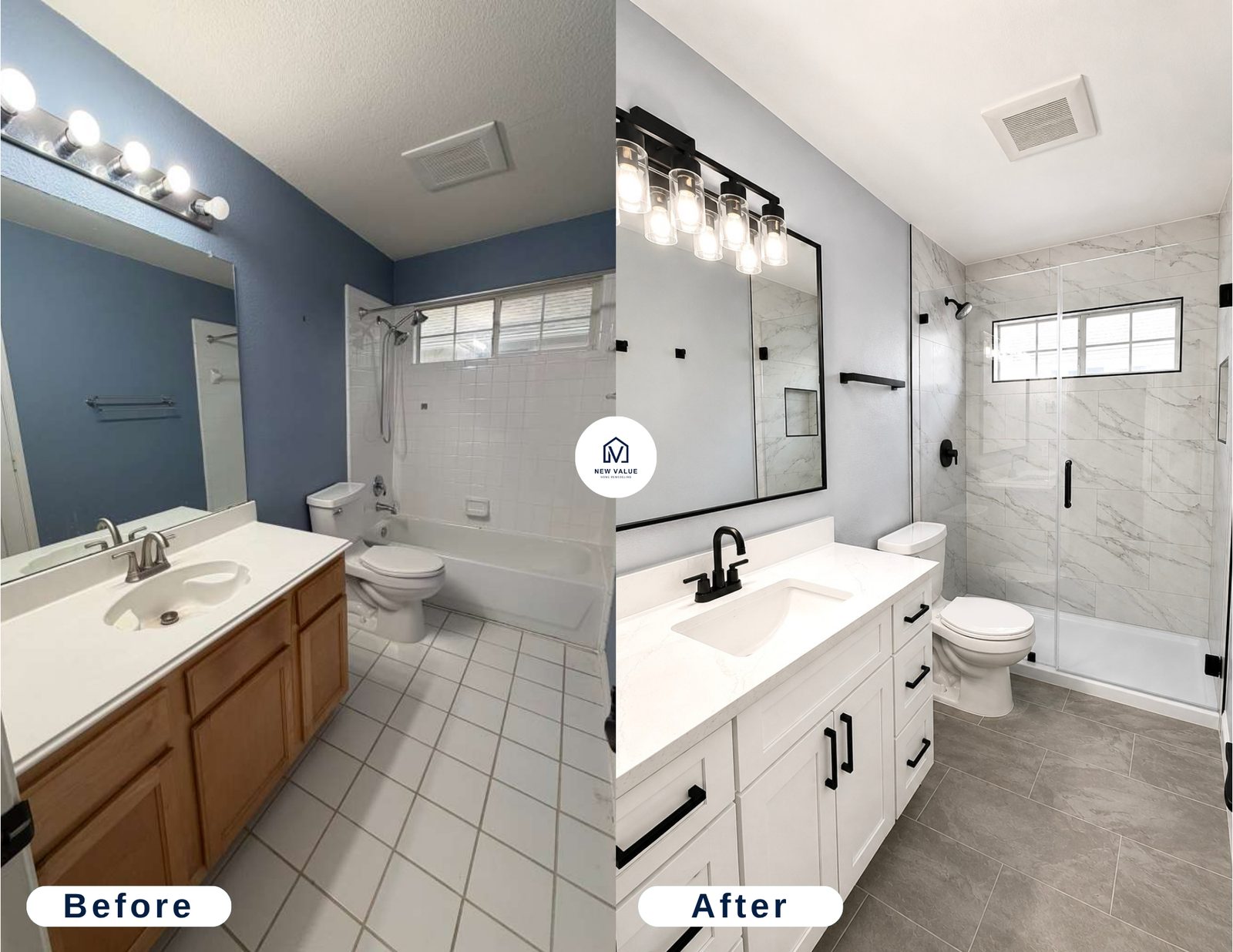
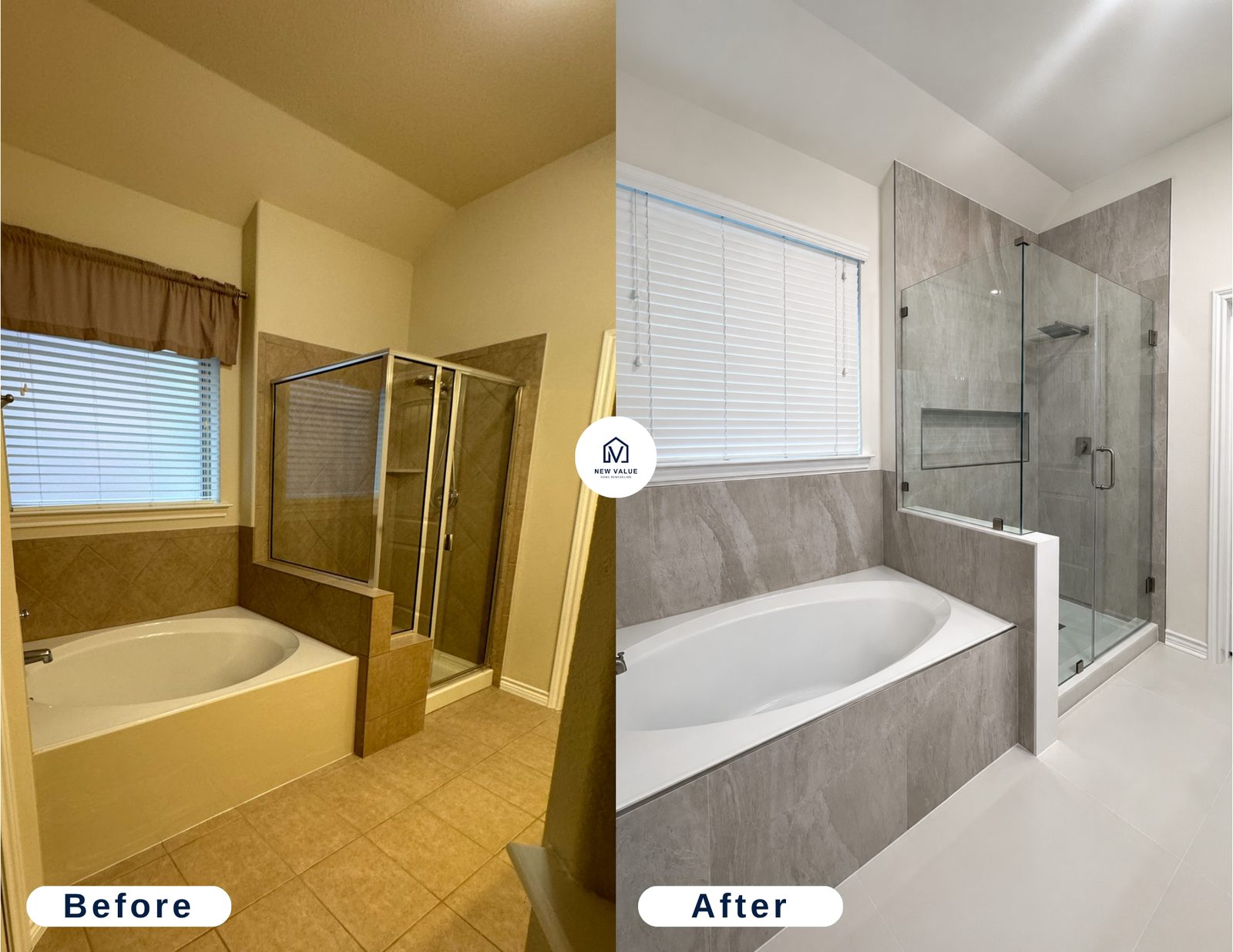
In a tub-to-shower conversion, the old tub area was never built to hold standing water on the floor. The drain moves, the floor gets a new sloped pan and the walls go higher with tile. That is why we treat every conversion as a full shower build, not a quick swap.
Talk to us about your shower
We remodel showers and full bathrooms across Collin County from our office in Allen, including Allen, McKinney, Plano and Frisco. Book a free in-home visit and we will show you exactly how your new shower will be built.
Thinking about a remodel?
Get a free, no-obligation in-home estimate from our family-owned team serving Collin County and North Dallas.
Request a Free Estimate